An Electric Hospital Bed at Home: Power Sockets, Extension Cords and Emergency Lowering
An electric hospital bed makes caring easier, but it depends on your home's power supply. Here is what to know about sockets, cords and emergency lowering.
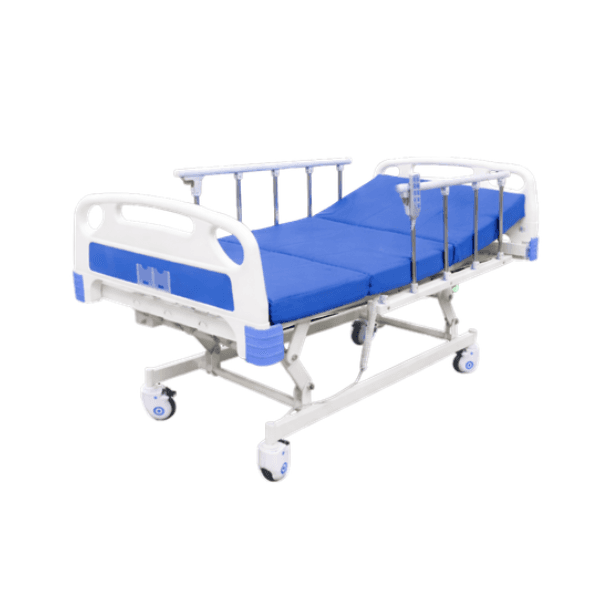
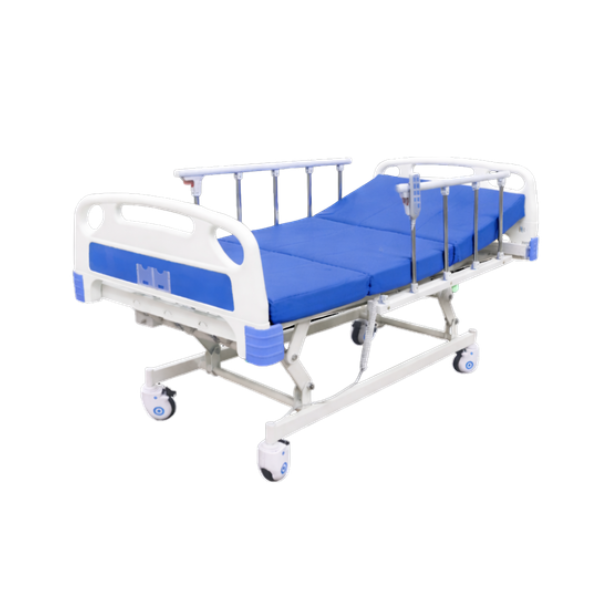
The Electric Auto hospital bed saves the carer a lot of effort. One press on the remote and the backrest rises, the legs lift or the bed height changes. Unlike a manual bed, though, an electric bed depends on your home's power supply. A little planning before it arrives makes it safer and smoother to use.
This article covers three practical points: where the power socket should be, why extension cords are best avoided, and what to know about the emergency lowering function. We do not cover house wiring. If you have doubts about the state of your wiring, get the view of a qualified electrician.
Planning the Bed Position and the Socket
Where the bed goes in a room is usually decided by space for the carer to move, the route to the bathroom and the light from the window. With an electric bed, one more item joins the list: distance to a power socket.
Find the socket before delivery day
- Identify the three-pin wall socket nearest to where the bed will stand.
- Check that it works by testing it with something small, such as a phone charger.
- Avoid sockets already used for high-power appliances such as a water heater or portable air conditioner.
- Take a photo of the wall and socket and send it to us on WhatsApp with photos of the room.
Space around the bed
An electric bed moves when you change its position. The head and foot sections rise and fall, and the height changes. Leave space behind the head of the bed and underneath it so no furniture or wall blocks the movement and no cable gets pinched.
Rooms in flood-prone areas
If your home is in a low-lying area that has flooded before, keep the plug and cable off the floor and away from doors or drains. Talk as a family about where the bed should go if water levels rise.
Why Avoid Extension Cords
Extension cords and multi-plug adaptors look like an easy fix when the socket is far from the bed. For equipment used every day beside a patient, though, they bring some risks.
The usual risks
- A cord across the floor is easy to trip over for a carer carrying a tray or helping the patient walk.
- The cord can get pinched under a wheel when the bed is moved slightly for sweeping.
- An overloaded multi-plug can heat up.
- A loose connection can make the bed stop mid-adjustment.
If there is no other option
Sometimes the room layout simply does not allow the bed near a socket. In that case, choose a thick, good-quality extension cord, never join cord to cord, do not share it with other appliances, and tape the cord along the wall so it does not cross a walkway. If the bed will be used for a long time, consider having a qualified electrician add a socket.
Look after the bed's own cable
Do not let the bed's power cable hang between moving parts. Check now and then that it is not scuffed, kinked or crushed, and tell us if you see damage.
Emergency Lowering and Power Cuts
The Electric Auto hospital bed has an emergency lowering function. It is there so the bed sections can be brought down in certain situations, for example when the patient needs to be laid flat quickly.
Learn it at installation
Every bed is installed in the room on delivery. Use that time to ask how emergency lowering works on your bed, and try it once yourself in front of the delivery team. Keep the bed's manual somewhere easy to find, and make sure at least two family members know how it works.
When the power goes out
- Stay calm. The bed will stay in its last position.
- Check the patient is comfortable and the side rails are locked.
- If the patient needs to be laid flat, use the emergency lowering function as shown at installation.
- When power returns, test each button once before carrying on as normal.
Keep a torch nearby
Keep a torch or emergency light near the bed. A night-time power cut is much easier to handle when you can see the patient and the remote clearly.
Compare with a manual bed
If the power supply at home is often interrupted, a manual bed may be more practical. The Standard hospital bed rents at RM225 a month (purchase RM1,250) and the Flexi II at RM325 a month (purchase RM1,800). The Electric Auto rents at RM580 a month, or can be bought for RM3,200. See details of every bed on our homepage.
Delivery and installation are free in Kuala Lumpur and Selangor, including Subang Jaya. For Kota Bharu, Kuching and other states, delivery is RM100–RM500 and we quote it on WhatsApp before you book.